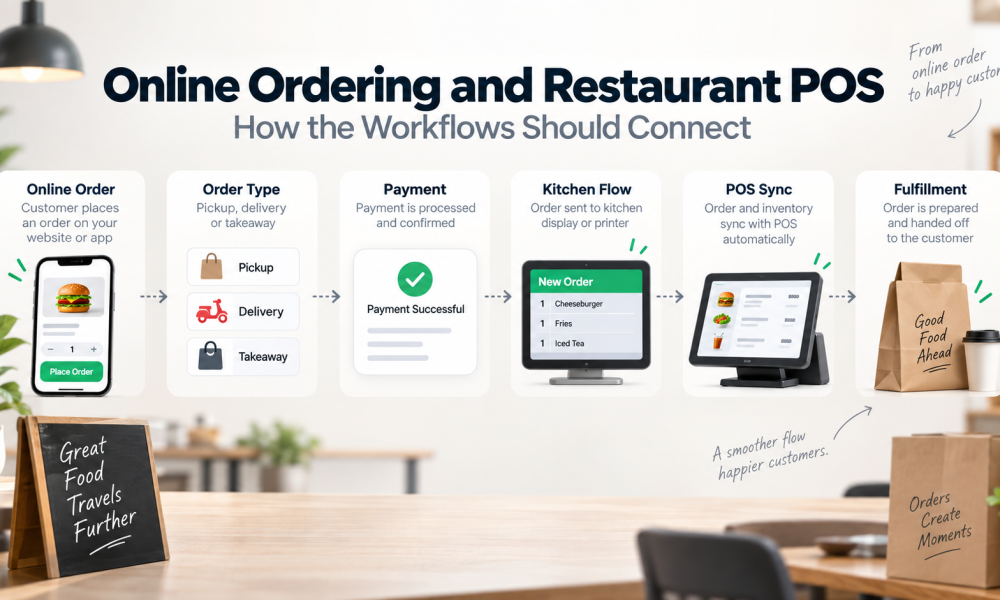
Restaurant ecommerce is less about shipping products and more about moving an order quickly from the customer to preparation and fulfillment. Online ordering works best when it is connected to the restaurant’s operational workflow instead of arriving as an isolated notification.
Orders may be dine-in, takeaway, pickup, or delivery. The order type influences timing, customer information, fees, preparation, and fulfillment. Staff should not need to reinterpret every online order manually.
Kitchen teams need the exact products, quantities, variants, modifiers, notes, and special instructions. Ambiguous item data can lead to remakes, delays, and customer complaints.
Some orders are prepaid while others are paid at pickup or delivery. Staff should be able to distinguish these states so customers are not charged twice and unpaid orders are handled according to policy.
A useful workflow can move an order through stages such as received, accepted, preparing, ready, completed, or cancelled. Restaurants using a kitchen display process benefit when front-of-house and preparation teams work from consistent order information.
Depending on the restaurant’s inventory model, online sales may need to affect sellable items or ingredient usage. At minimum, unavailable menu items should not continue accepting orders without a clear business rule.
A cancelled order may require refunding a payment, releasing reserved stock, and stopping kitchen preparation. The later the cancellation occurs, the more operational and financial consequences it may have.
Restaurants should be able to compare counter, dine-in, takeaway, delivery, and online sales without reconstructing totals manually. Channel reporting can inform staffing, menu decisions, and promotional activity.
SalePro includes retail and restaurant-oriented POS capabilities alongside ecommerce functionality, making it possible to build more connected order flows instead of managing online orders as a completely separate operation.
 arrow_upward